Commercial Mortgages for Gyms and Fitness Businesses
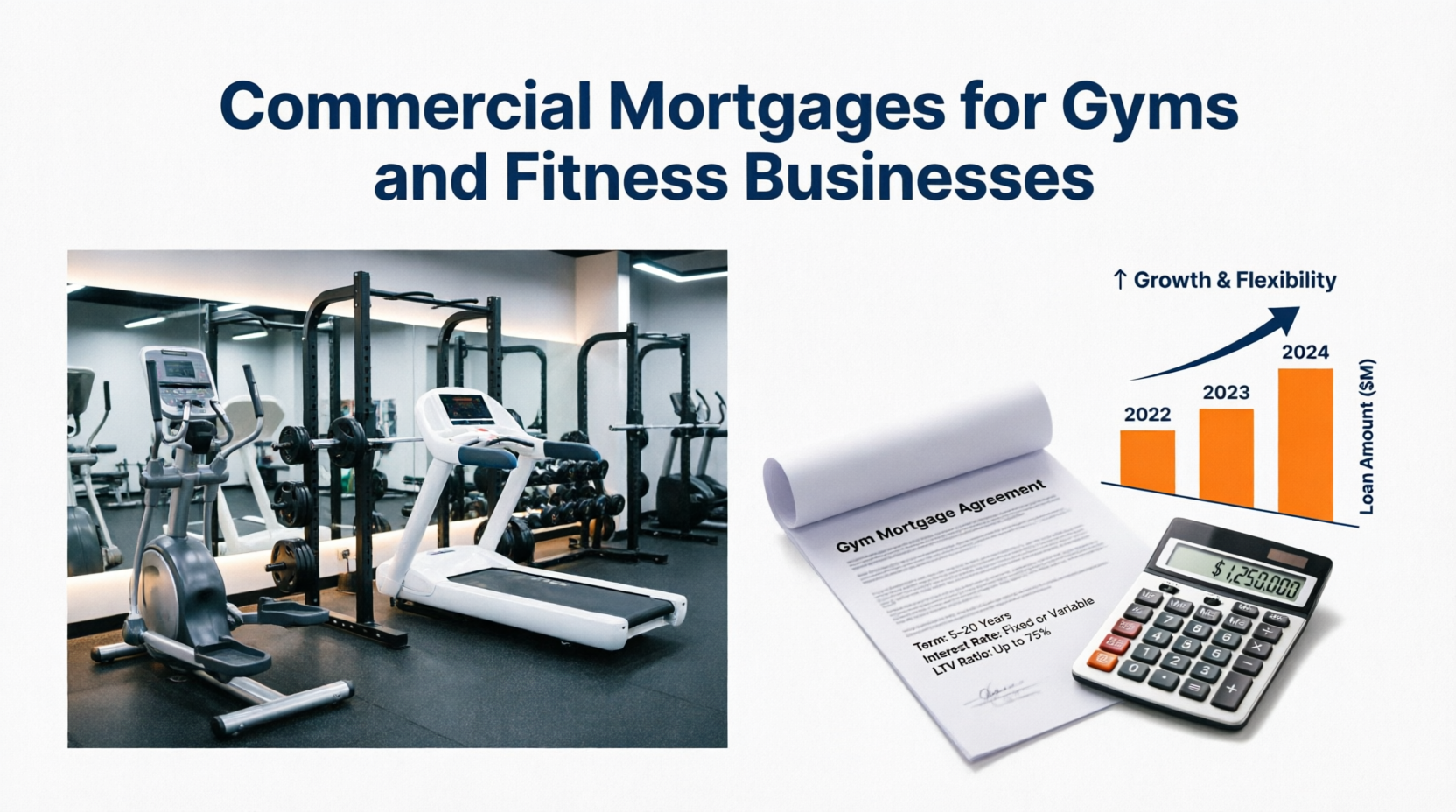
Buying the building your gym operates from is a very different proposition from buying an office or a shop. Lenders are not only assessing the bricks and mortar. They are also looking at a trading business whose income depends on memberships, retention and the person running it. That affects how the property is valued, how much a lender will advance and what paperwork you will be asked for.
This guide explains how commercial mortgages for gyms and fitness businesses generally work in the UK, what lenders tend to examine, how to prepare an application and where things commonly go wrong. Terms vary by lender, property and borrower, so the figures here are illustrations rather than promises.
Why Lenders Treat Gyms Carefully
A gym is usually classed as a trading property, meaning its value is closely tied to the business operating inside it. If the gym closes, the building may be harder to re-let or sell than a standard unit, particularly if it has been fitted out with changing rooms, studios, specialist flooring or a pool. Lenders factor that in.
Memberships are another consideration. Monthly direct debits give a gym predictable income, but lenders will want evidence that members stay, that the numbers have held up through quieter periods and that the business does not rely on a single instructor or a handful of large accounts. A gym with a long trading record and steady membership numbers is usually easier to present than a new opening with projections only.
Because of this, some high street lenders approach gyms cautiously, while others have more appetite for the sector. Which lenders will consider a particular case, and on what terms, changes over time and depends on the details. A broker with current knowledge of the market can save you applying to lenders that are unlikely to proceed.
Are You Buying to Run the Gym or to Let the Building?
The purpose of the purchase shapes almost every part of the application, so be clear about it from the start.
If you intend to trade from the premises yourself, lenders look at the business first. They will want to see how profitable the gym is, how comfortably it can service the repayments and how experienced you are as an operator. The property is security for the loan, but the trading figures carry much of the weight.
If you are buying the building to let to a gym operator, the emphasis shifts towards the tenant. Lenders will want to know who the tenant is, how long the lease has left, what the rent is and how secure it looks. A lease to an established operator with several years remaining generally reads better than a short lease to a start-up, though each lender judges for itself.
Some owners do both: they buy the building through a property company and lease it to their own trading company. This can be sensible, but it adds a layer of structuring that deserves proper advice from an accountant and a solicitor as well as your broker.
How the Property Is Valued
For a gym that is owner-occupied, the valuation often reflects the trading potential of the business, not just the market rent or comparable sales. Surveyors may use a profits-based method, looking at the fair maintainable trade and the profit a reasonably efficient operator could be expected to achieve. Valuations are normally carried out by a surveyor on the lender's panel, and many follow RICS Red Book standards, though the lender decides what it requires.
Two practical points follow. First, the figures you provide to the surveyor matter, so make sure they are accurate and consistent with your accounts. Second, the valuation may come in lower than the price you agreed, particularly if the business has grown recently or the property is highly specialised. It is wise to ask your broker what a lender is likely to do if that happens before you exchange contracts.
Typical Borrowing Levels and Deposits
Commercial lenders express the amount they will lend as a loan-to-value (LTV) percentage. For a gym, the maximum LTV varies widely between lenders and depends on the strength of the trading history, the property and your own financial position. As a purely illustrative example, if a property is valued at £800,000 and a lender offers 65% LTV, the loan would be £520,000 and you would need to find the remaining £280,000, plus costs.
Those costs can be considerable. Allow for legal fees, valuation fees, arrangement fees, stamp duty land tax (SDLT) on the purchase and any broker fee. SDLT on non-residential property in England and Northern Ireland is calculated in bands, and Scotland and Wales have their own taxes, so check current rates on GOV.UK or with your solicitor before budgeting.
Do not assume that a lender will release funds for fit-out or equipment as part of the mortgage. Some may consider additional borrowing for refurbishment, while others expect that to be funded separately. Raise it early.
What Lenders Will Want to See
Preparation makes a visible difference. Most lenders will expect some or all of the following, though exact requirements vary:
Two to three years of accounts, or the most recent set plus up-to-date management accounts if the business is younger
Business and personal bank statements, typically covering the past three to six months
A membership breakdown, showing numbers, average length of membership, cancellations and the share of income from direct debits, which most gym management systems can export
A business plan or summary, particularly for newer operators or where you plan significant changes
Details of the property, including tenure, any existing leases and planning use
Personal asset and liability information for directors or guarantors, since personal guarantees are common
Clear, consistent figures save time. If your management accounts are in Xero or QuickBooks, a tidy set of reports is easier for everyone to work with than a pile of spreadsheets.
Planning Use and Property Condition
In England, most gyms and fitness studios fall within the Class E(d) use class for indoor sport, recreation or fitness, though the rules differ in Scotland, Wales and Northern Ireland, and some uses or conversions need separate permission. Check that the property's permitted use matches what you plan to do, especially if you are converting a former warehouse, retail unit or church hall.
The building's condition matters too. Lenders and surveyors will consider structural soundness, fire safety, ventilation, drainage and, where relevant, the state of any pool or spa plant. Expect your solicitor to ask about EPC ratings as well, since energy performance requirements can affect commercial property that is let.
Understanding the Role of a Broker
If this is your first commercial purchase, the process can feel unfamiliar. A broker's job is to understand your circumstances, approach suitable lenders, present the case in a way those lenders can assess and manage the application through to completion. If you are unsure what that involves in practice, it helps to read what a broker actually does, which is covered in What Is a Mortgage Broker. Many commercial brokers charge a fee, take commission from the lender or do both, so ask how yours is paid before you proceed.
Some lending in this area is regulated by the Financial Conduct Authority (FCA) and some is not, depending on the borrower and the property. Ask any adviser to explain which applies to your case and whether the firm is authorized for that activity.
Mistakes That Slow Applications Down
Several problems appear repeatedly. Incomplete or inconsistent accounts cause lenders to query figures and delay decisions. Overly optimistic projections without evidence make a case harder to support. Treating the valuation as a formality can lead to a shortfall at a late stage. And approaching several lenders directly without coordination can lead to multiple credit searches and a confused picture.
Another common mistake is assuming the first indication is final. A lender's initial response is usually subject to valuation, legal checks and underwriting, and terms can change during that process. Keep contingency in both your budget and your timeline.
Common Myths Worth Setting Aside
Fitness owners often start with firm ideas about commercial lending: that a 50% deposit is always required, that no mainstream lender will consider a gym, or that a limited company cannot borrow without personal guarantees. Some of these have a grain of truth in certain situations and none is universally correct. Looking at how Mortgage Myths are explained will help you separate genuine requirements from folklore, and your broker can tell you what applies to your case.
If You Are Moving From Residential Borrowing
Many gym owners come to commercial borrowing after a lifetime of residential mortgages, sometimes after reading advice written for home buyers, such as First-time buyer mortgage advice. Much of that guidance on affordability and saving for costs carries over in spirit, but commercial lending uses different assessment criteria, valuations and legal processes. Treat it as a fresh process and ask questions when something is unfamiliar.
Evidence Helps, So Keep Records and Tell Your Story
Lenders deal with numbers, but they also respond to a clear account of how the business works and why it will keep working. If you publish case studies, member stories or progress updates about your gym, keep them accurate and consistent with what you tell lenders. If you want to build visibility for your own business, guidance on mortgage broker blogging shows how regular written content can support inquiries, and the principles apply to other local businesses too.
A Practical Starting Point This Week
Begin by gathering the documents a lender will ask for: your latest accounts, recent bank statements and a membership report showing retention and income. Write a one-page summary of the business and the purpose of the borrowing, including what you plan to buy, how you will fund the deposit and costs, and how repayments will be covered. Take that to a broker with experience of trading property and ask which lenders are likely to consider the case. Having that picture before you make an offer on a building puts you in a far stronger position than discovering the gaps afterwards.